Royal Engineering Works
A catalogue site and CMS for a stainless steel kitchen manufacturer.
- Type
- Client project
- Category
- Business website & CMS
- Year
- 2026
- Stack
- Next.js 16, React 19, Tailwind CSS v4, Keystatic, Resend
The challenge
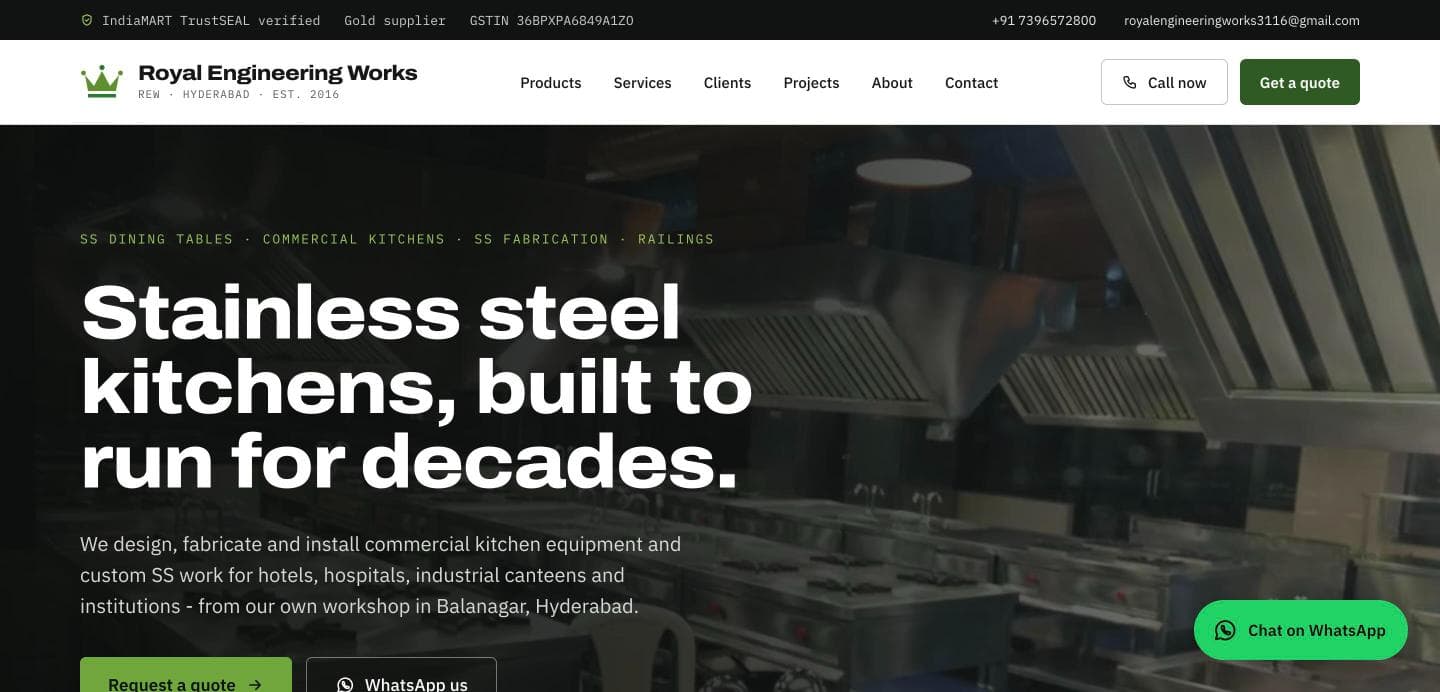
Royal Engineering Works has fabricated stainless steel kitchens and canteen furniture in Hyderabad since 2016, for clients like Megha Engineering, HBL Power Systems and Heritage Foods. They needed a site of their own that showed the full catalogue, ranked in search, turned visitors into quote requests, and could be updated without a developer.
The approach
A statically generated Next.js 16 site with a full product catalogue, category and case-study pages, and a quote form. Every page and product is content the owners edit in Keystatic, saved as YAML in the repository, so the site rebuilds whenever they change something.
What I built
- 01Next.js 16 App Router with React 19 and TypeScript, generating about 110 pages statically
- 02Keystatic content model for company details, home page, categories, products, clients and case studies, with editing docs for non-developers
- 03Editor locked down in production: /keystatic returns 404 until GitHub storage is enabled, so access is controlled by the repository
- 04Quote requests sent by a Server Action through Resend, keeping the visitor's input if sending fails
- 05SEO built in: per-page metadata, JSON-LD for LocalBusiness, Product, BreadcrumbList, Article and ItemList, plus sitemap, robots and a generated Open Graph image
- 06Tailwind CSS v4 design tokens, Vercel Analytics and Speed Insights, and server functions pinned to Mumbai
Outcome
The business now has a catalogue of over 100 indexable pages at royalengineeringworks.com, with trust signals like its IndiaMART 5.0 rating and client list up front, and quote requests landing straight in the owners' inbox.
What I learned
For a small business, the editing experience matters as much as the site itself: if the owners can't add a product in five minutes, the catalogue goes stale. Keeping content in Git gave them that without a database or a monthly CMS bill.